Boosting Protein Intake for Women Over 50: A Guide to Support Strength Training
As women age, particularly after 50, maintaining muscle mass and overall health becomes increasingly important, especially for those starting strength training. Increasing protein intake is a key factor in supporting this journey. Here’s a comprehensive guide on why protein is essential, how much you should be consuming, and the best food sources to meet your needs.
Why Protein is Important
1. Muscle Maintenance: Protein is vital for muscle repair and growth. As we age, our bodies naturally lose muscle mass, a process known as sarcopenia. Adequate protein intake helps combat this loss.
2. Weight Management: A higher protein diet can help with satiety, making you feel fuller for longer. This can aid in maintaining a healthy weight while engaging in strength training.
3. Bone Health: Protein plays a role in maintaining bone density, which is especially important for women over 50 who are at an increased risk of osteoporosis.
4. Recovery: Protein helps with recovery post-exercise, reducing muscle soreness and aiding in quicker return to workouts.
How Much Protein Should You Be Eating?
The general recommendation for protein intake varies based on activity level and health goals. For women over 50 starting strength training:
– Daily Intake: Aim for **1.2 to 2.0 grams of protein per kilogram of body weight**. For example, if you weigh 68 kg (150 lbs), you should consume between 82 to 136 grams of protein daily.
– Post-Workout: Incorporate protein within 30 minutes after workouts to optimise muscle recovery.
High-Protein Food Sources
Incorporating a variety of protein sources into your diet can help you meet your daily needs. Here are some excellent options:
1. **Lean Meats**:
– Chicken breast
– Turkey
– Lean cuts of beef and pork
2. **Fish and Seafood**:
– Salmon
– Tuna
– Shrimp
3. **Dairy Products**:
– Greek yogurt (especially high in protein)
– Cottage cheese
– Milk (opt for lower-fat versions if desired)
4. **Plant-Based Sources**:
– Lentils and beans (chickpeas, black beans)
– Quinoa
– Tofu and tempeh
– Edamame
5. **Nuts and Seeds**:
– Almonds
– Chia seeds
– Hemp seeds
6. **Protein Supplements** (if needed):
– Whey protein powder
– Plant-based protein powders (pea, rice, etc.)
Tips for Increasing Protein Intake
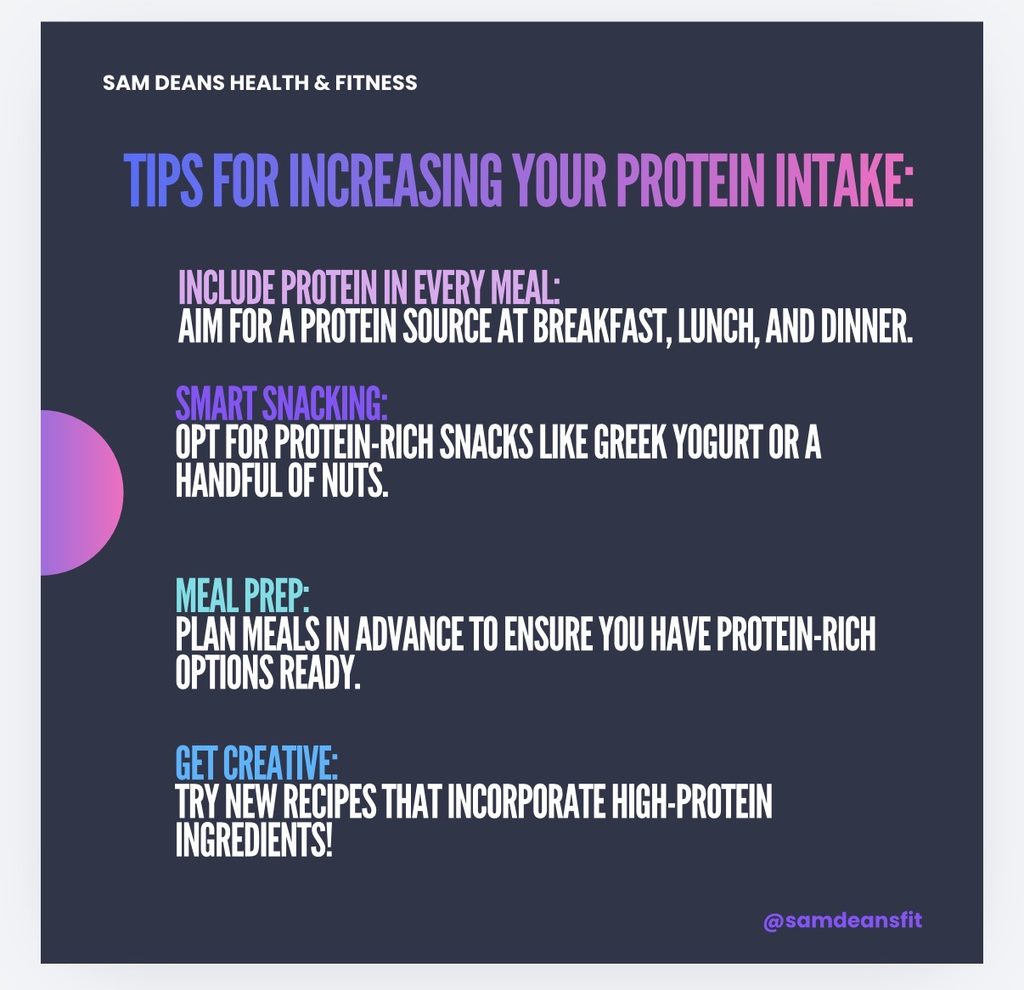
– **Incorporate Protein at Every Meal**: Aim for a source of protein in every meal and snack.
– **Snack Wisely**: Choose high-protein snacks like Greek yogurt, nuts, or protein bars.
– **Plan Ahead**: Meal prep can help ensure you have protein-rich meals ready to go.
– **Experiment with Recipes**: Try new recipes that incorporate high-protein ingredients, such as smoothies with protein powder or salads topped with grilled chicken or chickpeas.
Conclusion
Increasing your protein intake is a crucial step in supporting your strength training regimen as you age. By understanding how much you need and where to find it, you can enhance your fitness journey and overall well-being. Remember, consistency is key, and every small change contributes to your health goals. Let’s lift lean and thrive together!
Sam Deans Qualified Experienced & Insured Fitness Consultant
Subscribe to YouTube channel https://youtube.com/@samdeans?si=hWCg30OQKTnxnaN3
Check out my website for more health & fitness tips / blogs on www.samdeansfit.com
Check out my social media pages : https://www.facebook.com/SamDeansFit https://www.instagram.com/samdeansfitness https://linktr.ee/samdeansfit